
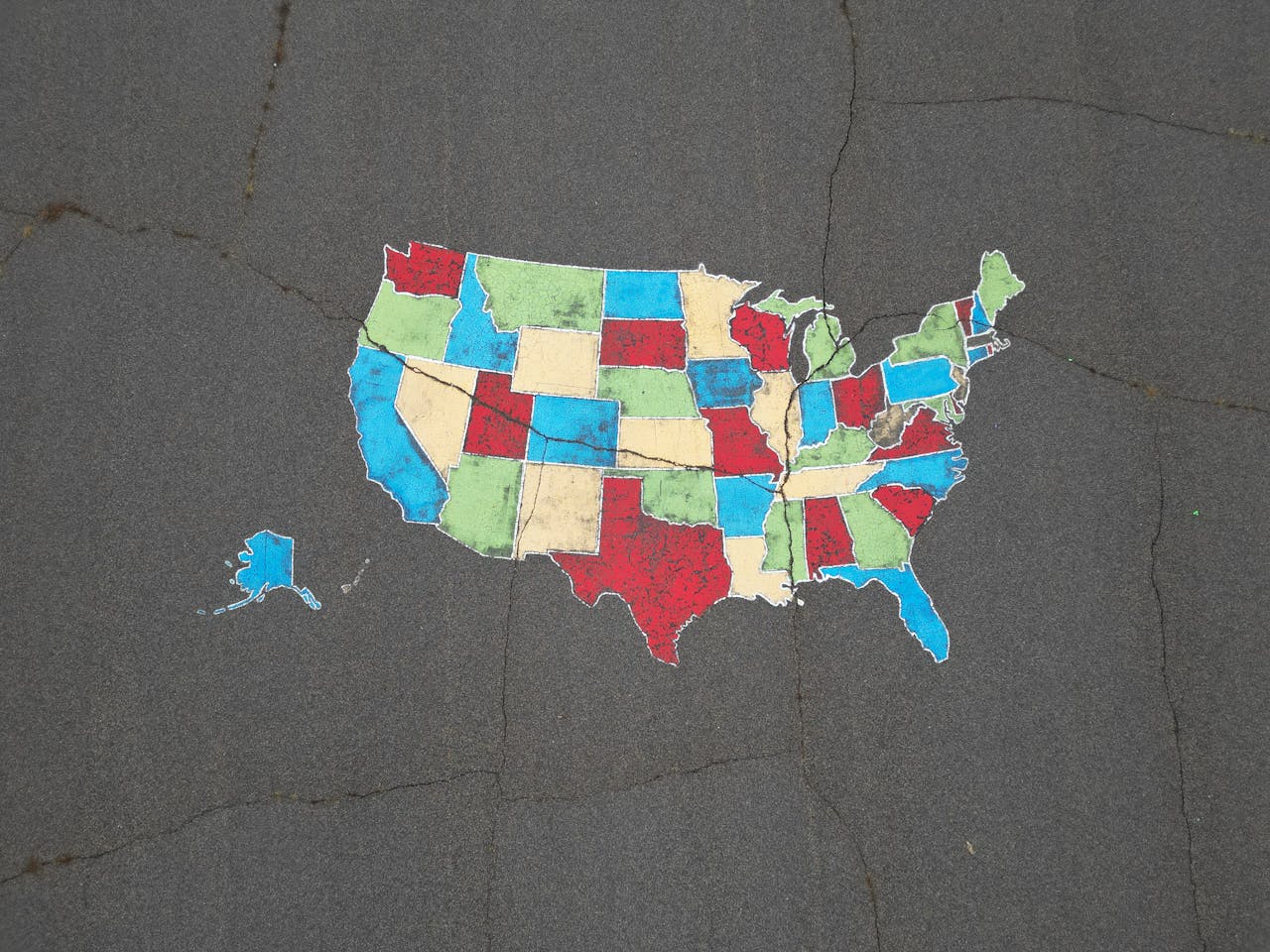
A Guide for Ecommerce Businesses
- Physical presence still matters: storing inventory or having remote employees can trigger nexus even if you never set foot in a state.
- Economic sales tax nexus thresholds range from $100,000 in sales to 200 transactions, but a few states march to their own drumbeat.
- 16 states still enforce click-through nexus laws, meaning affiliate marketing relationships can create tax obligations even without a physical presence.
- Marketplace facilitator laws now cover all states with a sales tax, but sellers in states with complex local filing requirements may still face compliance burdens.
Dealing with sales tax nexus thresholds by state can feel like trying to solve a Rubik’s Cube blindfolded. When you think you’ve got a handle on physical presence rules, economic nexus thresholds shift. When you grasp the click-through nexus, another state changes its marketplace facilitator laws.
It’s not uncommon for a business to accidentally create nexus by, for instance, letting a part-time blogger in some other state promote their products. Alternatively, you might trigger compliance requirements simply by exceeding $100K in Texas-based sales despite never touching a single product shipped there. What are the stakes for such small mistakes regarding nexus thresholds by state? Many states impose penalties ranging from 10%-25% of unpaid taxes, plus interest, depending on how long the liability goes unaddressed!
While exact figures vary, ecommerce businesses are increasingly targeted for sales tax audits, mainly if they sell across multiple states and lack proper compliance oversight. But knowledge is power: Let’s dissect the various types of sales tax nexus by state, reshaping online retail, and exactly where each state draws its compliance lines.
What Exactly is a Sales Tax Nexus Threshold?

A state’s sales tax nexus threshold acts like a tripwire – cross it and you’re suddenly on the hook for collecting and remitting taxes in that state. These thresholds exist because of the 2018 South Dakota v. Wayfair, Inc. The US Supreme Court ruling let states tax remote sellers without physical presence. All states with sales tax use economic activity metrics to implement nexus rules.
Think of thresholds as states saying: “Sell X dollars here and we consider you ‘present’ enough to pay up.” The problem? States don’t necessarily agree on what “X” is and how to determine it. Regarding a state’s nexus threshold, some states only care about revenue, while others count net transactions, and a few even demand physical ties to the state.
Four Key Nexus Triggers:
- Physical Presence Nexus: This can include Inventory warehouses, employees, contractors, and even temporary trade show booths!
- Economic Sales Tax Nexus: This nexus is determined by revenue and/or transaction benchmarks. For instance, many states’ sales tax nexus is triggered when a business has $100K in sales or 200 transactions.
- Click-Through or Affiliate Nexus: These are determined by compensation agreements with in-state marketers.
- Marketplace Nexus: These are triggered by third-party marketplace platform sales meeting specific criteria.
Now, let’s map out the minefield of nexus thresholds by state!
Physical Presence Thresholds
Despite the revolutionary Wayfair ruling, physical presence remains a key option for nexus creation. Many states still use it as a primary enforcement against smaller sellers.
What counts as physical presence for ecommerce businesses in 2025?
- Inventory in Amazon FBA warehouses (even third-party storage)
- Remote employees working from home offices
- Independent contractors making sales calls
- Pop-up shops that last longer than a day (Texas) or 15 days (California)
- Leased equipment in-state
Some Watchlist States:
- New York: Any inventory storage triggers nexus, even if owned by third parties.
- Texas: Trade show participation that lasts longer than a day counts as “physical presence” and will trigger this state’s nexus threshold!
- Florida: Having a remote employee working from the state may create nexus.
Economic Sales Tax Nexus Thresholds
While most states initially adopted the $100,000 in sales or 200 transactions threshold of economic activity post-Wayfair, many have since changed their policy. Many US states’ sales tax nexus laws have eliminated the transaction threshold. Some states have also dramatically increased the revenue threshold for triggering nexus, such as California, Massachusetts, New York, and Texas, each of which has raised its revenue threshold to $500,000!
Three Things to Look Out For:
- Marketplace Sales: 20 states exclude third-party platform sales from economic thresholds, while the others include them.
- Shifting Nexus Thresholds in States: Many states have been altering their transaction (often by eliminating it) and revenue thresholds. For instance, Tennessee lowered its revenue threshold from $500,000 to $100,000 in 2020. One should always check for recent or impending policy changes to sales tax nexus by state.
- Lookback Periods: While most states use rolling 12-month calculations, some, such as Hawaii, Missouri, and Texas, use the previous calendar year for their sales tax nexus.
Click-Through Nexus
Sixteen states still enforce “click-through” nexus laws. If you pay commissions to in-state affiliates, such as bloggers, influencers, or review sites, you could unwittingly trigger a nexus!
Click-Through Thresholds:
Because click-through nexuses can be tricky, reviewing a complete list of the various click-through nexus thresholds by state is worth revisiting!
|
State |
Click-Through Threshold in Annual Referral-Driven Sales |
|
Connecticut |
$100K (preceding 4 quarters) |
|
Georgia |
$50K (preceding 12 months) |
|
Idaho |
$10K (preceding 12 months) |
|
Illinois |
$10K (preceding 4 quarters) |
|
Iowa |
$10K (preceding or current calendar year) |
|
Louisiana |
$50K (preceding 12 months) |
|
Michigan |
More than $10K and more than $50 K in total referral receipts (preceding 12 months) |
|
Minnesota |
$10K (preceding 12 months) |
|
Nevada |
$10K (preceding 4 quarters) |
|
New Jersey |
$10K (preceding four quarterly sales-tax periods) |
|
New York |
$10K (preceding four quarterly sales-tax periods) |
|
North Carolina |
$10K (preceding four quarterly sales-tax periods) |
|
Pennsylvania |
Any compensated referral triggers nexus in Pennsylvania. This state’s nexus threshold has no minimum – |
|
Rhode Island |
$5K (preceding 4 quarters) |
|
Tennessee |
$10K (preceding 12 months) |
|
Vermont |
$10K (preceding tax year) |
Marketplace Facilitator Laws

With the rise of significant online marketplaces came a deluge of new complexities for the state’s sales tax nexus policies. Luckily, in the wake of the Wayfair ruling, many states have realized that it’s much easier to put the burden of sales tax nexus on these large marketplace facilitators rather than the small businesses or sellers that operate on them. Marketplace facilitator laws have shifted the responsibility of handling the collection and remittance of sales tax to large platforms like Amazon, eBay, Walmart, and Etsy.
Of course, just like with other sales tax nexus thresholds by state, marketplace facilitator laws can vary from state to state, and some relative holdouts burden the individual seller even if all their sales are on such marketplace platforms. These states’ sales tax nexus policies often require frustrating registration and filing processes:
|
State |
Registering and Filing |
Burden in Simplified Terms |
|
Connecticut |
A seller must obtain a Sales & Use Tax Permit and file an annual OS-114 return. |
$100 permit fee, registration, yearly return required even when no tax is due |
|
Indiana |
Sellers exceeding $100K must obtain a Registered Retail Merchant Certificate and file sales-tax returns |
Registration, returns required even if no tax is due |
|
Kansas |
Sellers exceeding this state’s nexus threshold of $100K must register within 30 days and file returns. |
Registration, an annual return (monthly/quarterly if sales volume is large enough) |
|
Nebraska |
Sellers over $100K or 200 in transactions must obtain a permit and include all sales in their return. |
Registration, monthly or quarterly return filings |
|
New Mexico |
Sellers over $100K must register for Gross Receipts Tax, file returns, and deduct marketplace facilitated receipts. |
Registration, monthly or quarterly GRT returns, even when the tax is fully deducted. |
What Sellers Should Do
Keeping up with sales tax nexus thresholds and rules can be highly confusing, especially if you’re new to them. Luckily, when it comes to navigating nexus thresholds by state, there are some common-sense steps every seller can take to mitigate risks:
- Map Your Exposure: See what sales tax nexus by state your business runs the risk of triggering and identify your unique, potential risks. For instance, if you hire bloggers, ensure you aren’t triggering nexus thresholds in states with click-through rules!
- Audit Historical Sales: Since the statutory look-back period in states can vary, it’s a good rule of thumb to have at least 3 to 4 years of sales tax returns and other records!
- Prioritize Registration: Once you have a basic understanding of nexus thresholds by state, it’s best to do necessary registration in those states that have such requirements, and especially prioritize those that have a higher risk of sales tax audits, such as California and Texas!
- Implement Tracking: Make sure you can monitor sales across all channels in real time!
- Document Everything: Save tax exemption certificates, shipping records, and platform reports—such documentation will help with current state policies and maybe even future policy changes!
How RJM Tax Exemption Can Help
Navigating different sales tax nexus triggers isn’t just confusing; it can be dangerous for your business if done improperly. Luckily, our specialized ecommerce tax team can help you deal with all states’ nexus threshold regimes! We provide numerous services, such as:
- Threshold Monitoring: Real-time alerts when approaching a state’s sales tax nexus triggers.
- Filing Services: We can help you or your business with all state registrations and returns, no matter the size of your business or how many states you have to file with!
- Audit Defense: With RJM Tax Exemption, you can reduce your audit risk to virtually anything, and if you do get audited, we can help you navigate the process.
- Platform Expertise: We are industry leaders in helping businesses that work with large marketplace facilitators such as Amazon, eBay, and Shopify!
Don’t let shifting nexus thresholds in states threaten your business or strangle your growth! Contact us for a free nexus risk assessment consultation today and sleep easy knowing that we’ll help you be fully compliant in all 50 states!
















